

Rethinking NCAP: Lessons from India’s Air Pollution Strategy
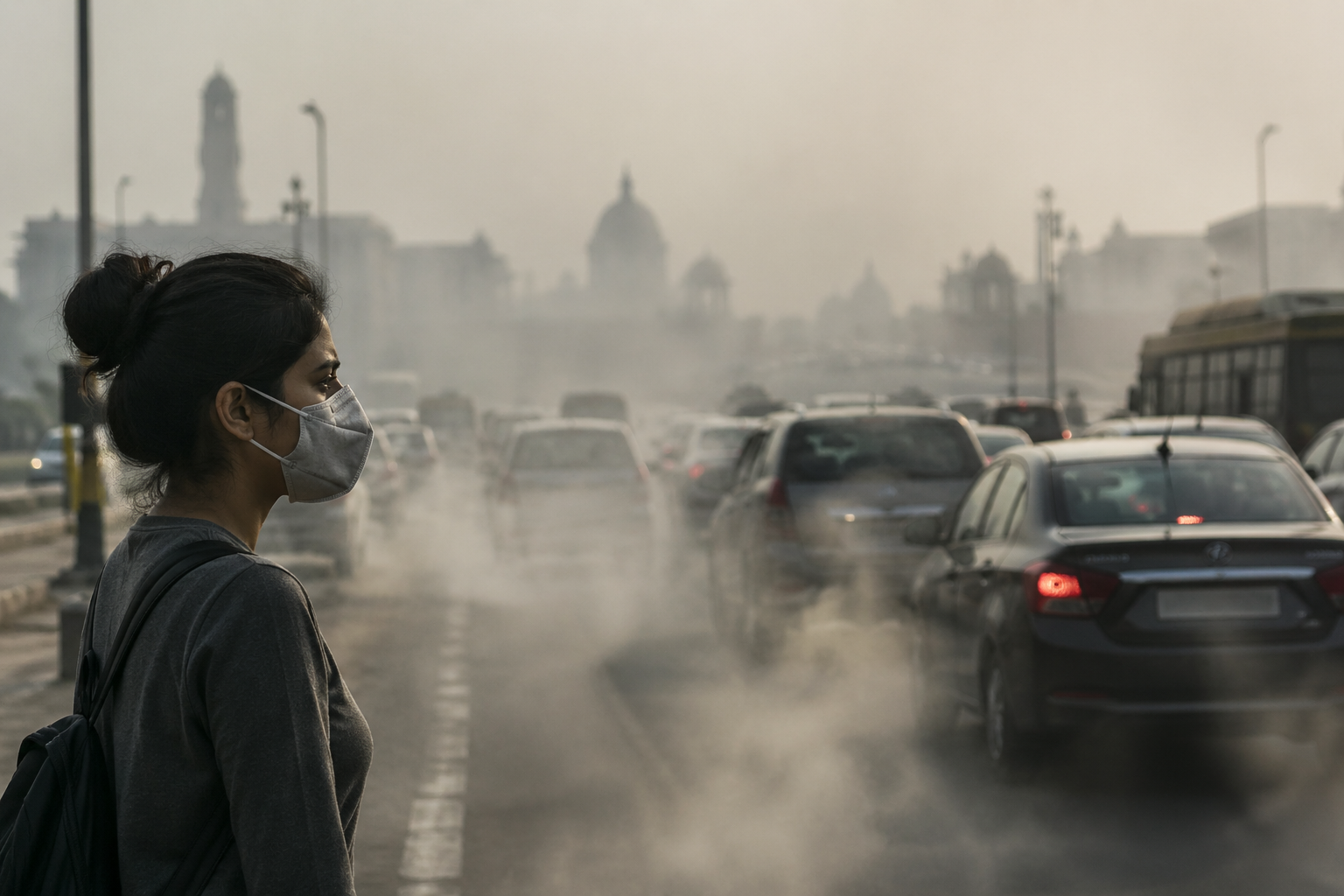
Air pollution is one of the most pressing health challenges facing India today. At its heart is particulate matter (PM), the tiny particles suspended in the air that, when inhaled, can penetrate deep into the lungs and bloodstream. The coarser variety, PM
In 2019, India launched the National Clean Air Programme (NCAP) — its first dedicated, national-level strategy to tackle this problem. NCAP set targets for reducing PM
Though the programme’s original deadline of 31 March 2026 has now passed, results are mixed. PM
Researchers and policy advocates are now discussing an “NCAP 2.0” — one that addresses the structural gaps of the first phase and shifts attention to the finer, more harmful PM
Lessons from NCAP
- Complex fund flow delays implementation: Although substantial funds were allocated, releases were much lower.
5 Utilisation, across cities, was even lower than releases. Funds had to pass through several administrative layers before they reached the urban local governments (ULGs) responsible for spending them. In Delhi, for instance, funds are moved across 15 institutions for spending. Hence, cities only received funds towards the end of the financial year, leaving limited time for procurement, tendering and administrative approvals.6 This delayed implementation and impacted fund utilisation. - Agencies must be sufficiently empowered: Though air pollution is transboundary, NCAP designated ULGs as implementing agencies. While they could use NCAP funds for certain specified activities there was also the expectation that funds from other central schemes would be utilised to support long-term interventions. However, since ULG jurisdiction was limited to municipal boundaries, they primarily focused on activities to reduce road dust or waste, which remained largely within their control and were unable to effectively converge funds because they lacked oversight over other departments/ schemes. Other pollution sources could not be addressed adequately and long term regional planning could not be initiated as a result.
- Diffused responsibility weakens planning: Though planning for air pollution required the involvement of multiple departments no single authority was made responsible for outcomes or empowered to take action. This made coordination difficult, left implementing agencies with incomplete information about other activities being undertaken or funds received, and impacted the ability to formulate a cohesive plan.
- Performance based releases can limit achievement of long-term goals: Fund release was contingent on performance criteria like reduction in PM
10 levels, which encouraged cities to prioritise short-term interventions for road dust mitigation that could deliver immediate, and visible results, rather than longer-term structural interventions that would have helped sustain air quality improvements. - Limited transparency weakens outcomes: Public access to information on spending and outcomes was limited. The PRANA portal did not provide expenditure breakdowns, making it impossible to track spending. Further, though cities established grievance platforms, these were often integrated within existing larger systems. As a result air quality complaints were not tracked separately or analysed in some states. Without clear expenditure data or grievance tracking, citizen oversight remained weak.
- Top down planning overlooks local realities: Cities’ entitlement to funds was formula-based and contingent on fulfilment of pre-defined criteria, with no consideration of unique needs/ project readiness. This resulted in there being no long term plan for expenditure at the time of fund release.
What needs to change
NCAP 2.0 must focus on designing a system that acknowledges the nature of air pollution, and learns from the failures in the first phase, to enable effective outcomes.
- Adopt airshed-based governance: Air pollution can only be addressed by recognising its transboundary nature. Moving from the city-level to district/ regional governance can enable coordinated action across jurisdictions and would ensure pollution in even rural areas is addressed. A good precedent is the Namami Gange programme which takes a river-basin approach to conserving the Ganges. The approach has been given statutory backing, and is supported by the establishment of institutions like the National Ganga Council, that have representation of both central and state governments. This helps with coordination across geographical borders to manage pollution in the river.
- Create clear institutional ownership and convergence mechanisms: A separate institution with a clear air pollution mandate must be established and given the authority to coordinate across departments, access information, and drive implementation for integrated planning.
- Simplify and streamline fund flows: Reducing intermediaries and enabling timely, direct transfers will improve utilisation and allow implementing agencies to act promptly.
- Publish data: Public access to granular data on spending, along with dedicated grievance redressal systems can improve accountability by shifting focus from allocations to service delivery, and enable learning across states.
- Invest in technical capacity at the local level: Local institutions need the technical expertise to understand pollution sources so that interventions can be designed. Capacity building must move beyond scheme compliance, to focus on problem solving and strategy.
- Redesign incentives to reward long term outcomes: Performance frameworks must be redesigned so that sustained improvements and structural interventions are rewarded, as opposed to short-term improvements in air quality.
- Enable bottom-up planning: Funding should be linked to project proposals and local needs, rather than uniform formulas. This allows cities to design context-specific solutions and encourages more bottom-up planning.
NCAP was an important step towards acknowledging the scale of India’s air pollution crisis, however, what we need now is a more integrated approach with direct and timely fund flows, stronger institutional capacity, better data, and a clear focus on delivery.

